Case study
Spirited Paw
Redesigning the PDP buy box — the moment a browsing dog owner decides to trust a supplement enough to subscribe.
- Role
- Product & Growth Designer
- Focus
- CRO · PDP Buy Box
- Timeline
- January 2025
- Team
- Design, Product, Growth
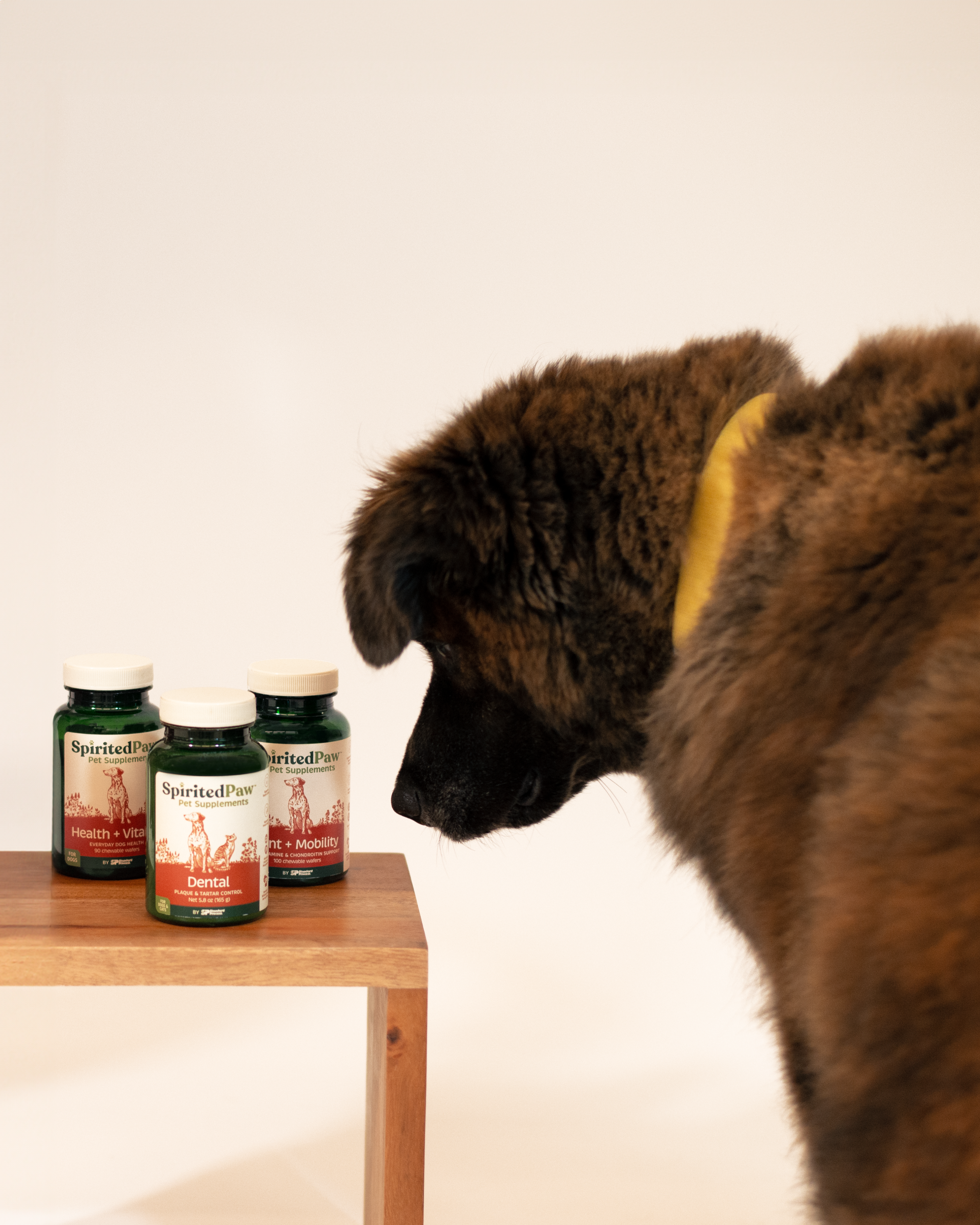
My role
I led the redesign of the PDP top section and buy-box experience (tabbed product info + package selection), working across growth, product, and development to plan, test, and ship it as an A/B experiment.
Spirited Paw sells pet wellness supplements. The moment before checkout is where trust holds or breaks — a dog owner has to believe the product fits their pet, the subscription rhythm makes sense, and the value is clear enough to commit to an ongoing purchase.
This case study covers one focused piece of a larger ongoing engagement: the redesign of the PDP buy box. It tracks three connected decisions — establishing a first PDP direction, replacing quantity with day coverage, and redesigning around the reality that most of the traffic was mobile.
Stop 1 — Direction 9
Building a PDP from scratch for a young brand
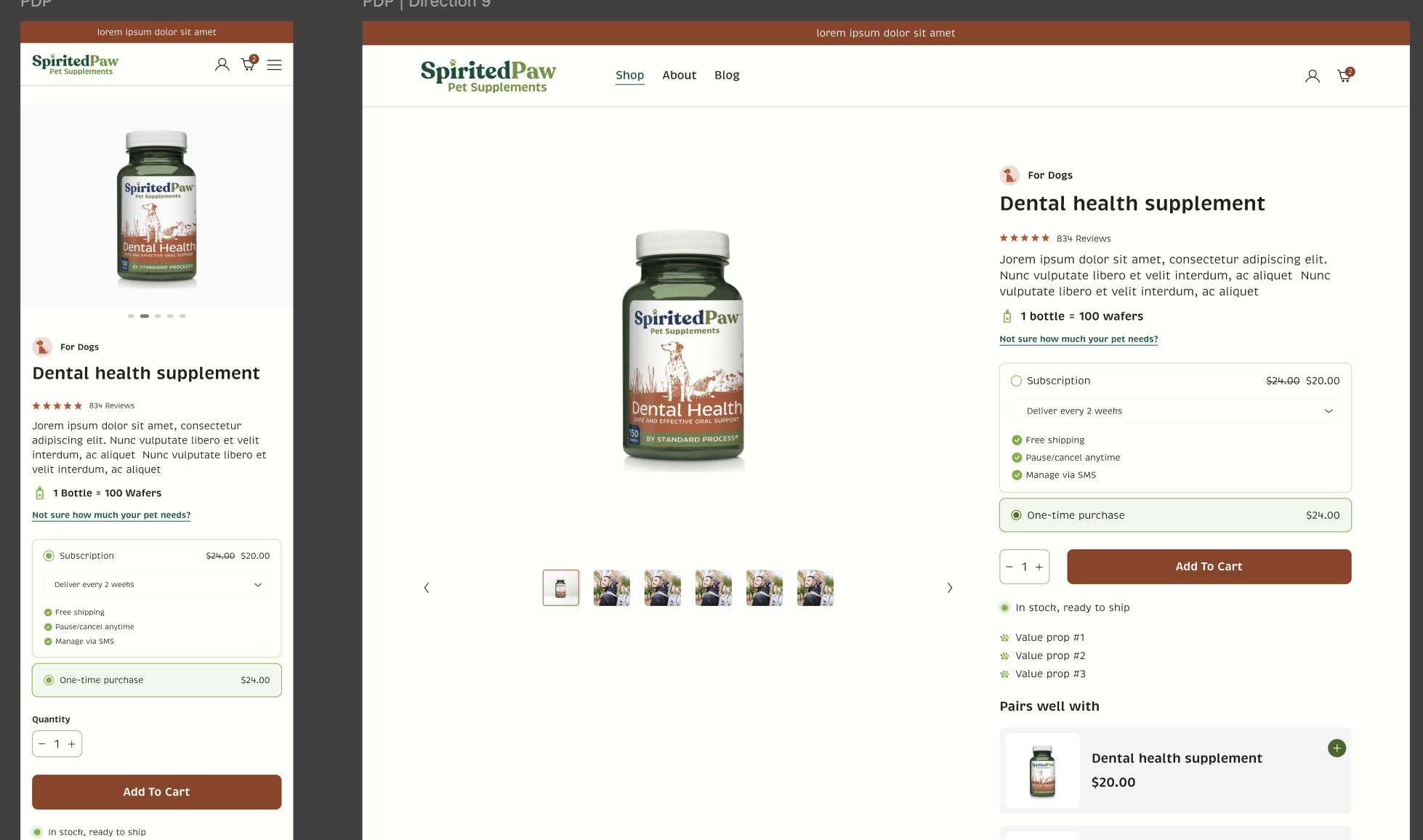
There was no existing PDP to iterate on. The first version had to define subscription versus one-time, quantity, dosage help, and cross-sell all at once.
Starting without precedent
Spirited Paw needed a product detail page that could stand on its own: explain the supplement, guide package choice, make subscription feel like the obvious better deal, and leave room to cross-sell without overwhelming a first-time visitor.
Direction 9 became the foundation — a first pass at the buy-box structure that separated product education from purchase decisions and gave the team something concrete to test against.
Stop 2 — Days of Supply
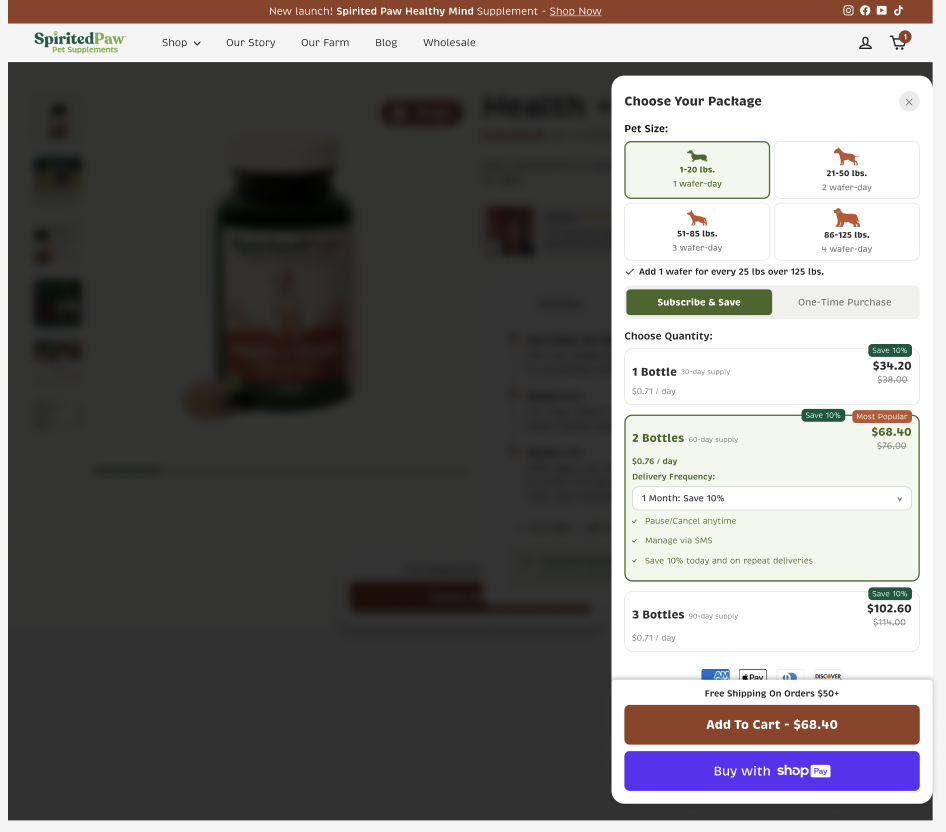
Replacing the quantity selector with a number customers actually think in
Dog owners don't think in bottles. They think in how long a supply lasts. The brief asked us to make that translation explicit.
What the brief asked for
Take a single probiotic SKU and let customers choose their supply in days. One solution had to work for both subscription and one-time purchase, while respecting fixed bottle sizes and real serving math.
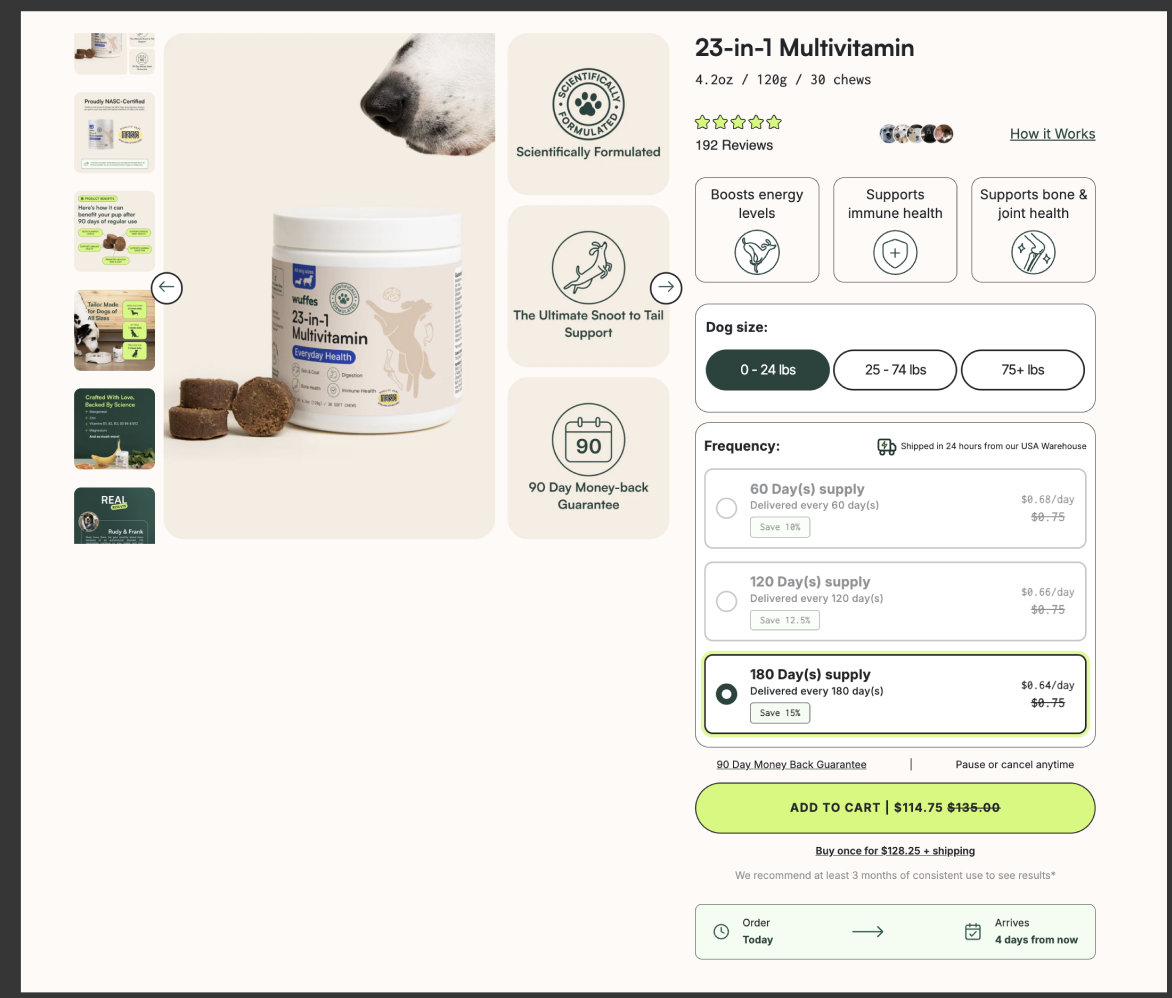
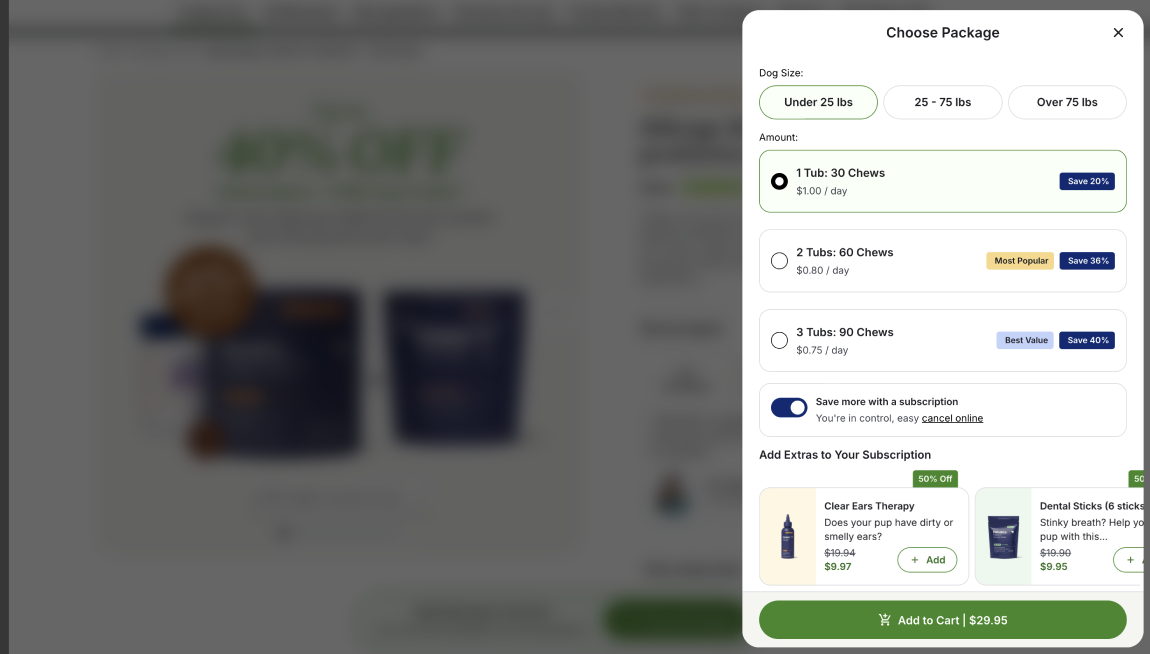
How competitors solved the same fixed-bottle problem
Wuffes and Pet Lab Co had already landed on the same insight: surface day-supply selectors and per-day pricing so the customer understands value without doing the math themselves.
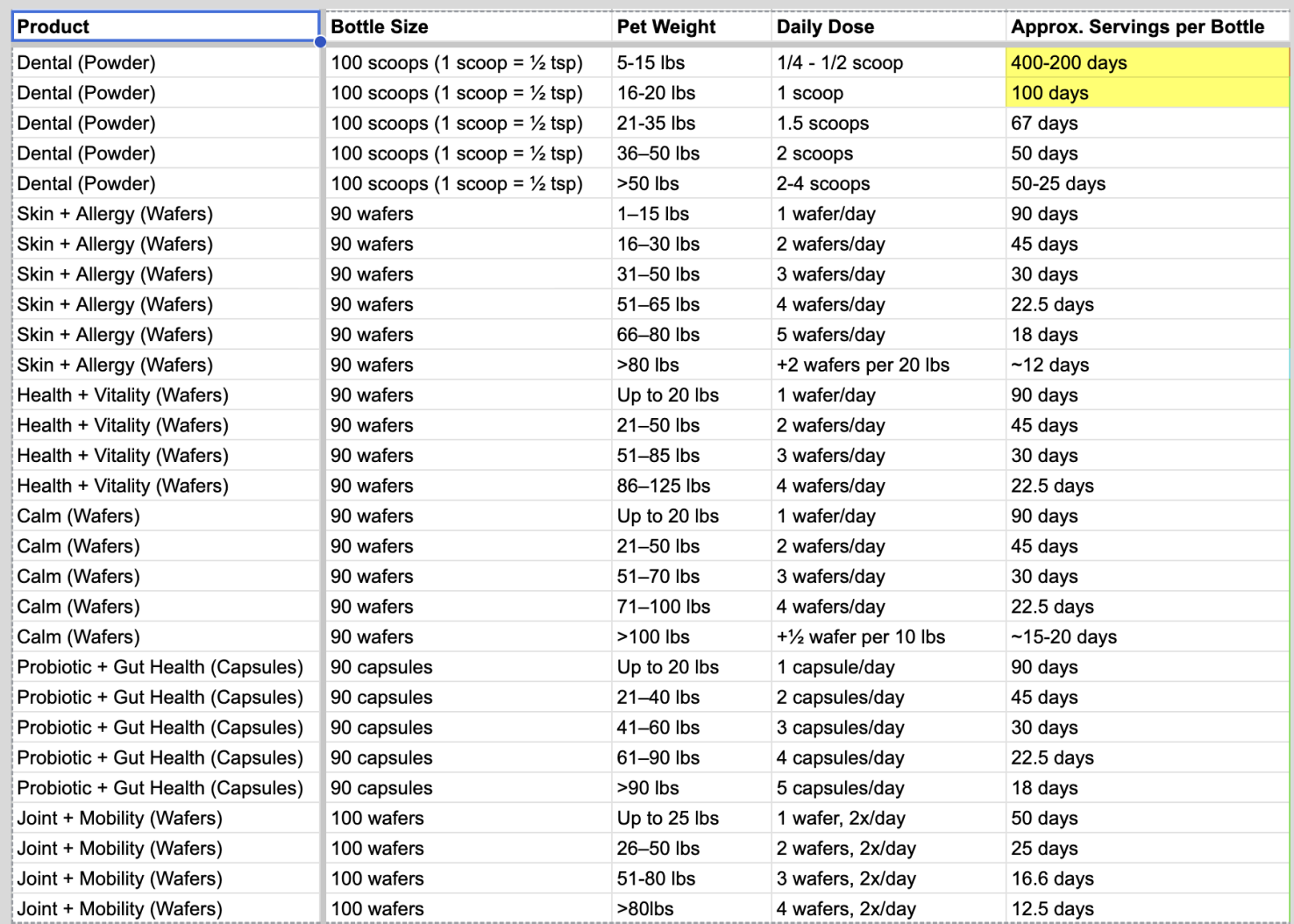
What the servings-per-bottle matrix looked like
Behind every option was a matrix: SKU format, pet weight, serving size, and bottle count. That mapping was the real design problem — the UI was only as clear as the logic underneath it. The same "day supply" language had to cover 12 to 400 servings across wafers, capsules, powders, and weight tiers. The interface looked simple; the mapping between what a customer selected and what the warehouse shipped was not.
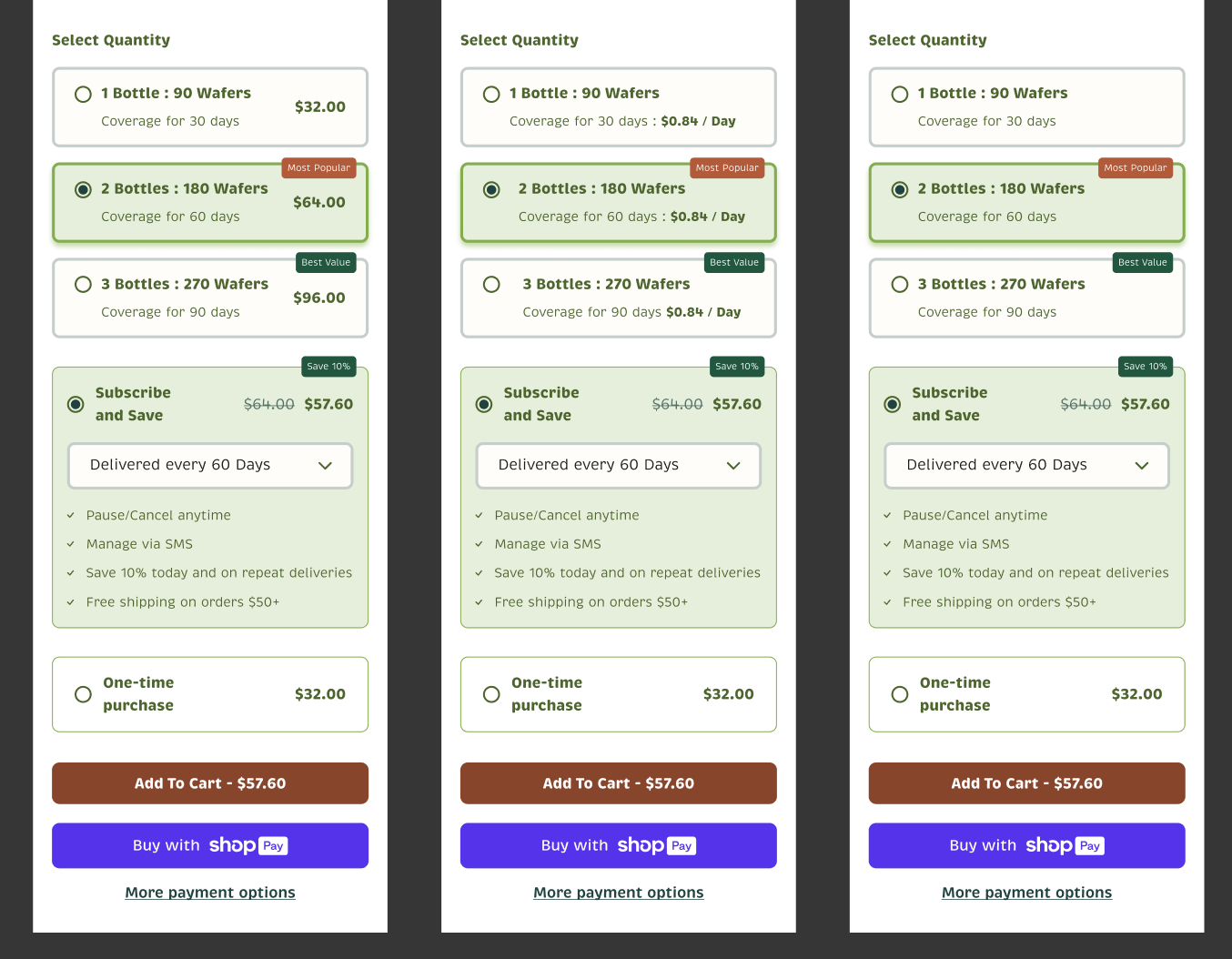
Testing the language for day coverage
We ran an A/B/C test comparing day-coverage language against per-day pricing language. The winning variant made the subscription value legible without hiding the one-time option — and it moved the numbers we were optimizing for.
Stop 3 — V3, currently rolling out
Redesigning around what the data exposed: mobile
The buy-box test won on desktop, but more than 60% of the traffic was mobile. That gap became the brief for the next version.
What the brief asked for
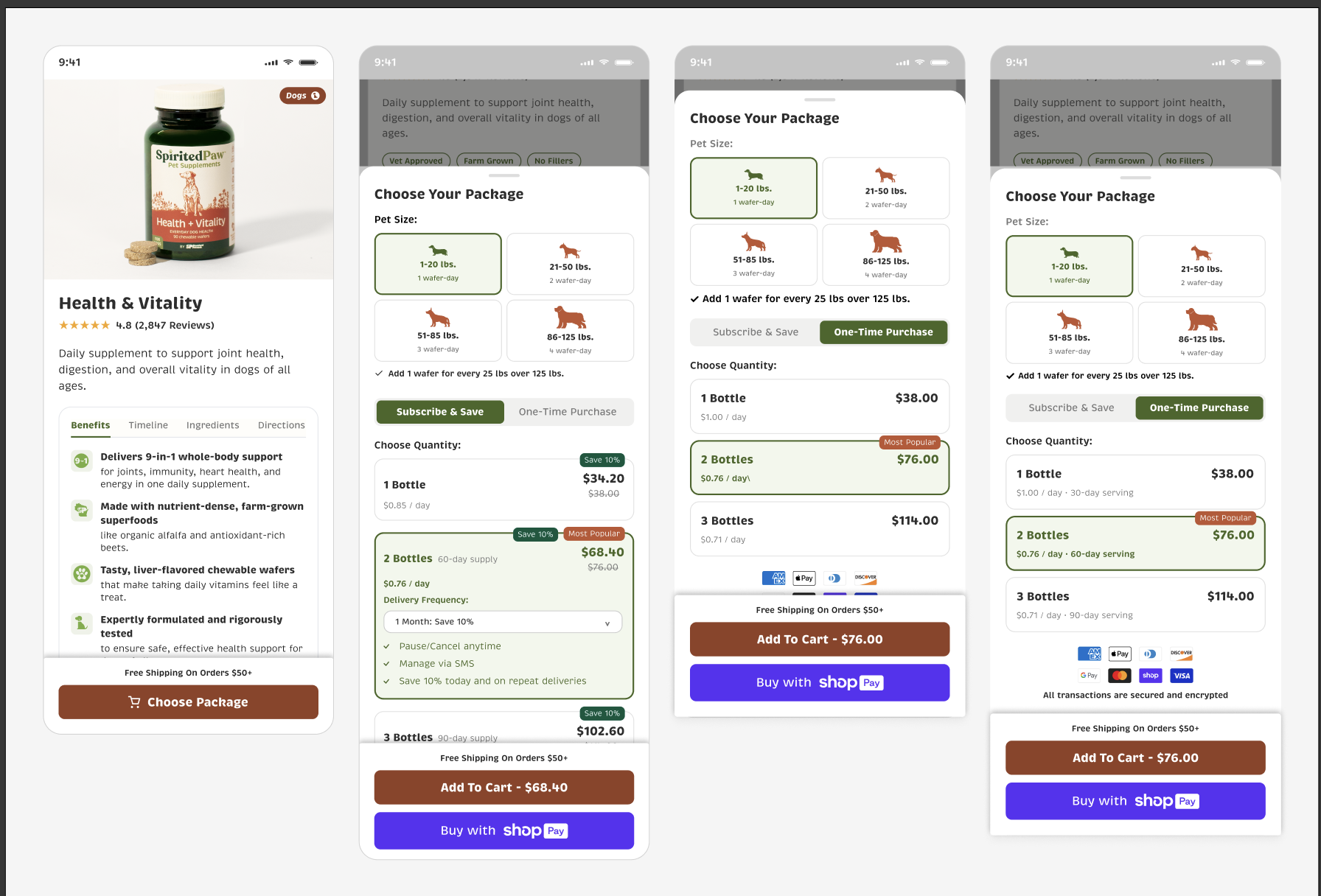
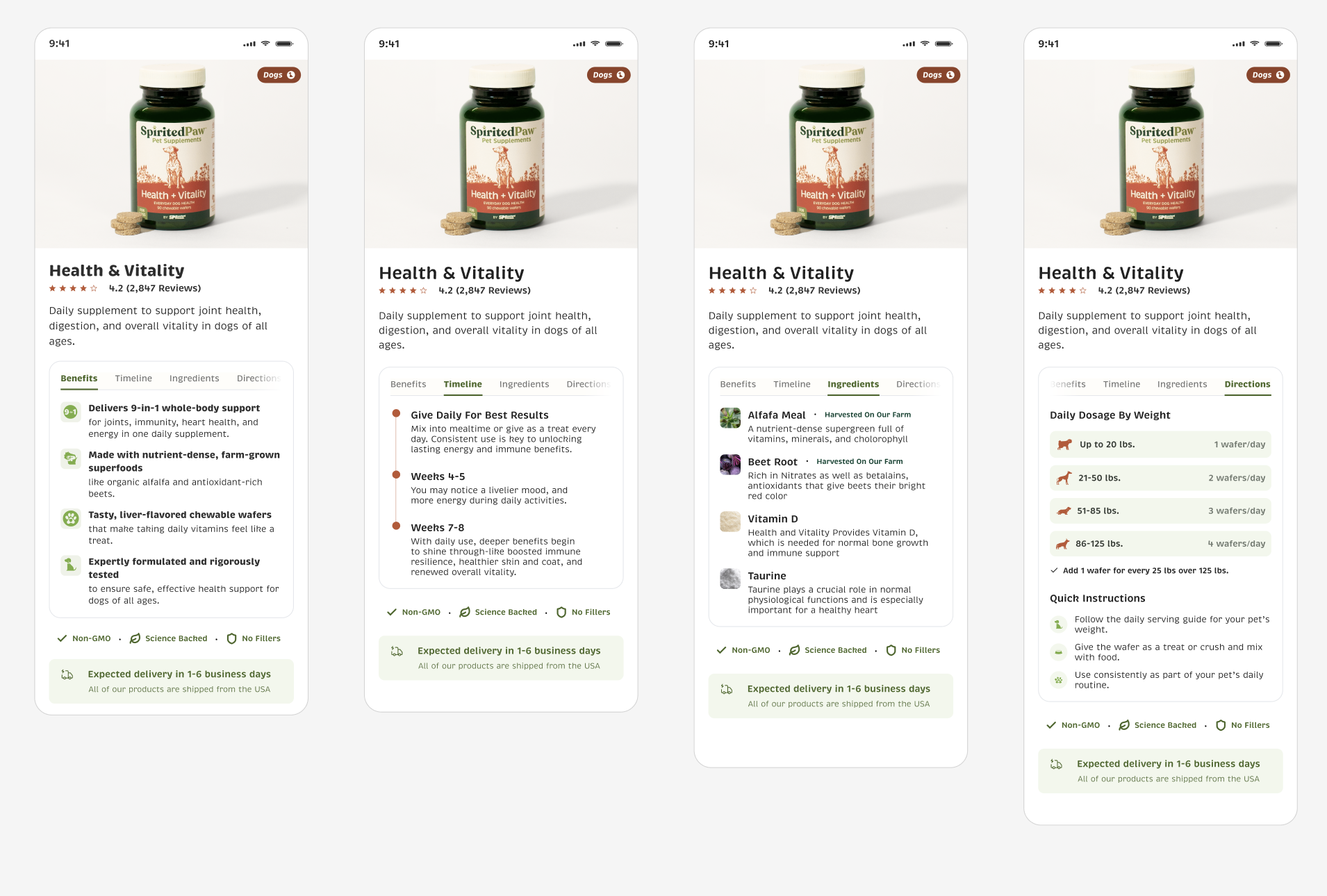
A mobile-first PDP: tabbed product info, a sticky "Choose Package" CTA that opens a drawer, and "90-day supply" language carried through the package-selection experience.
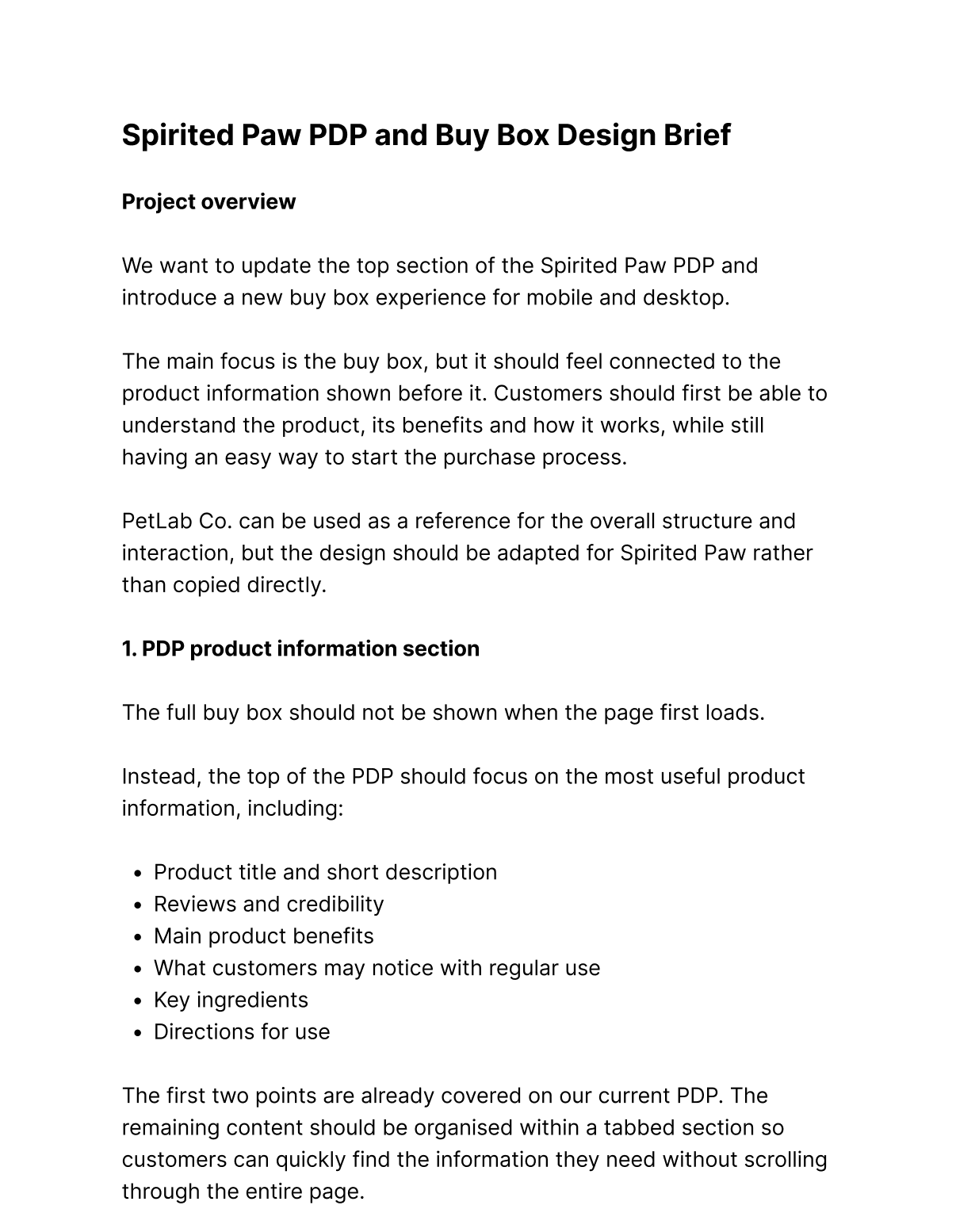
What's rolling out now
V3 is live in rollout. The final mobile PDP puts package choice and pet size first, keeps the subscription value visible, and uses tabbed product info to keep the screen scannable without hiding depth.
The honest caveat: because V3 is rolling out alongside other changes, its isolated impact isn't measured yet. The +9% AOV / +7% RPV result that follows is from the desktop buy-box test in Stop 2.
Results
What the buy-box test moved
+9%
Lift in Average Order Value from the new PDP buy-box experience
Desktop only
+7%
Lift in Revenue Per Visitor from the new PDP buy-box experience
Desktop only
Both lifts came from the desktop buy-box test. With more than 60% of traffic on mobile, that gap was the reason V3 existed — the desktop win became evidence for a bigger swing at the same problem.
Also from this engagement — not part of this case study
Email design
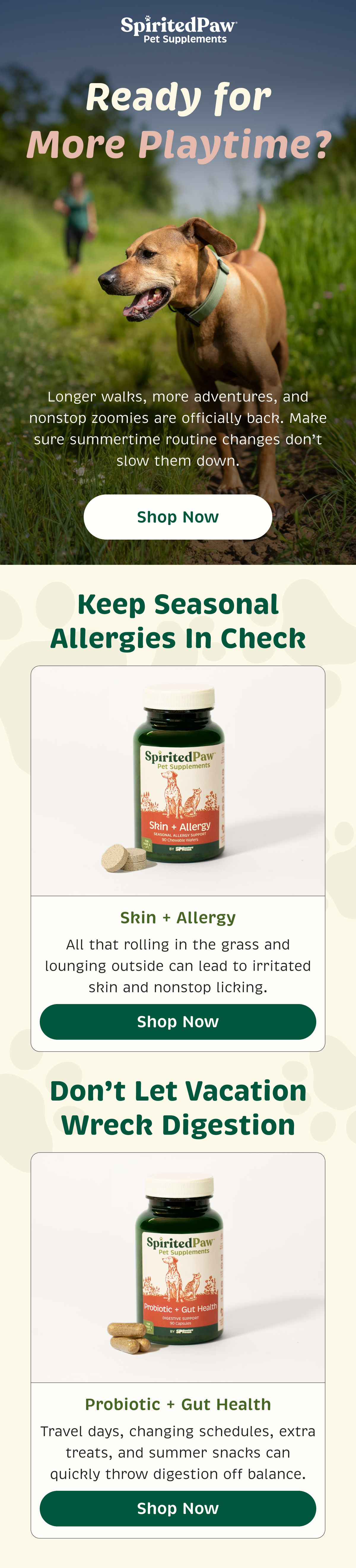
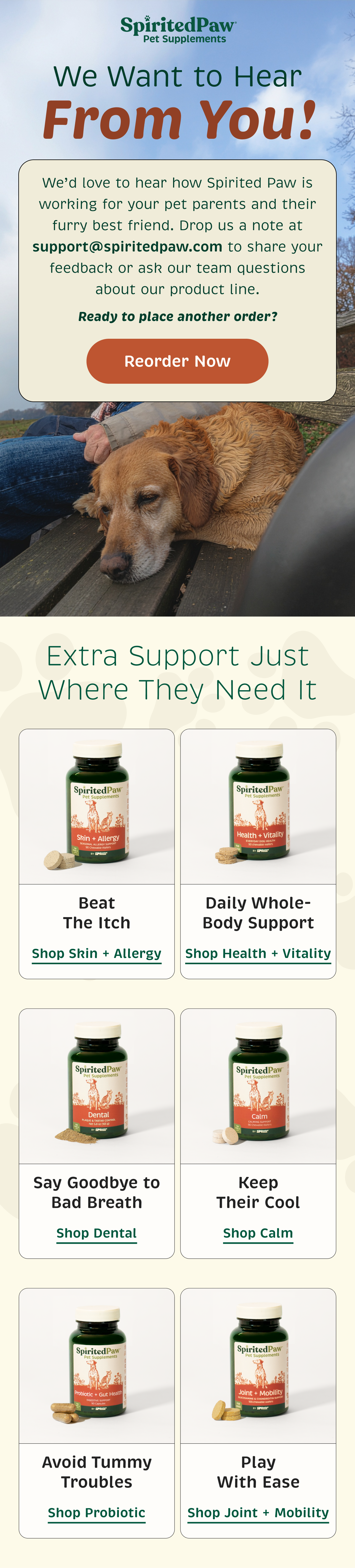
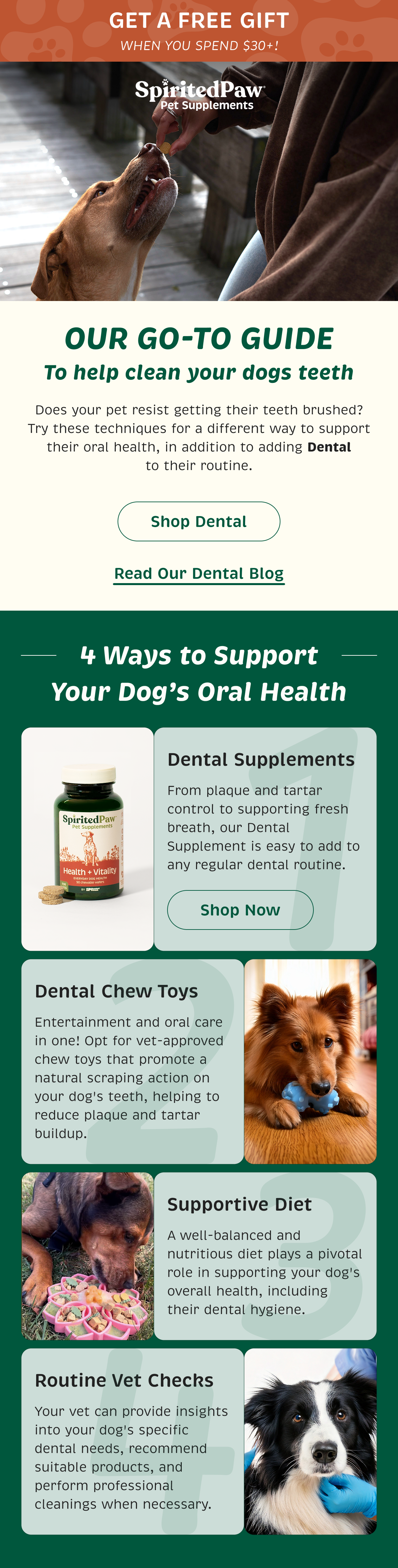
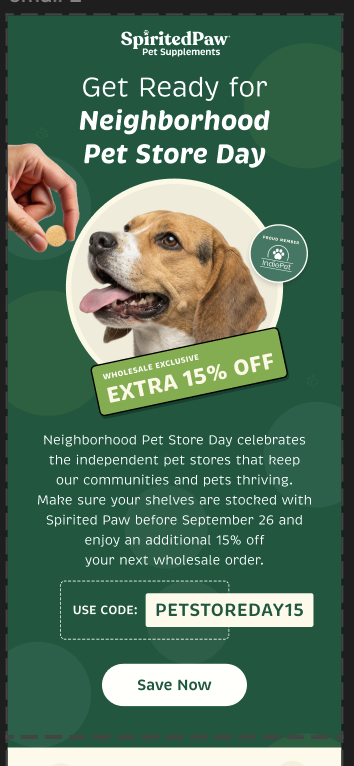
Lifecycle and retention email campaigns for Spirited Paw, shown here as a straightforward gallery rather than walked through as a case study.






Next Project
Possible